
La porosité est l'un des défauts les plus discutés dans le moulage sous pression car elle peut affecter la résistance, l'étanchéité, l'usinage et l'apparence. C’est aussi souvent mal compris. Tous les pores n’ont pas la même cause ni le même risque.
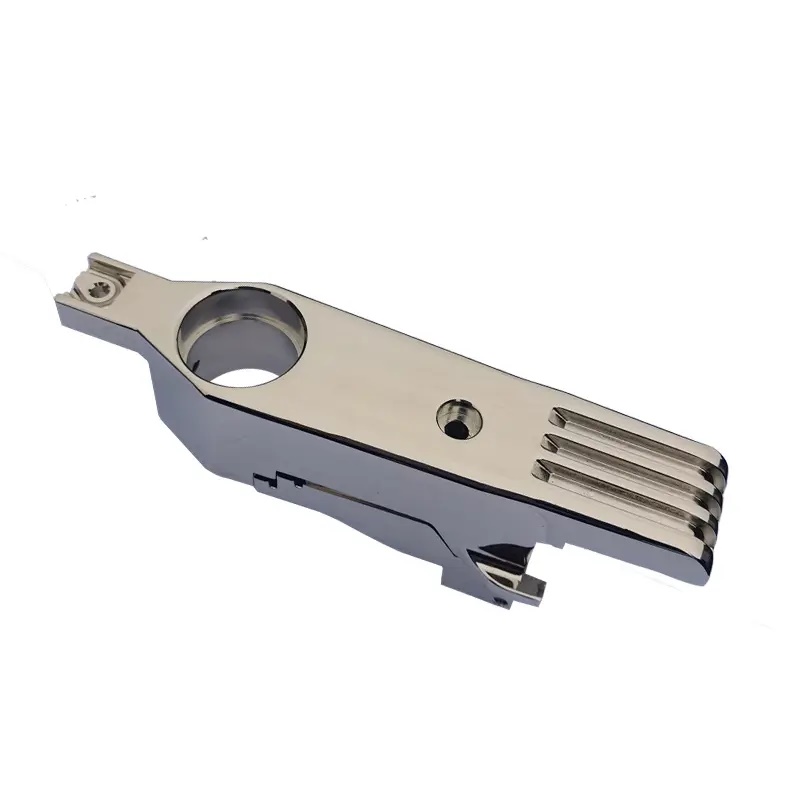
La porosité peut provenir de l'air emprisonné, du retrait, d'une mauvaise ventilation, de sections de murs épaisses ou de l'instabilité du processus. La méthode de contrôle dépend de la conception de la pièce et des exigences fonctionnelles.
| Cause | Comment cela apparaît de la part | Prévention ou contrôle |
|---|---|---|
| air emprisonné pendant le remplissage | petits pores après usinage ou sectionnement | examiner la conception de la porte, du trop-plein et de la ventilation |
| retrait local autour des sections épaisses | pores près des bosses ou des murs épais | améliorer la transition des murs et l'équilibre du refroidissement |
| mauvaise stabilité du processus | les défauts varient selon les lots | contrôler les paramètres de la machine et les enregistrements d'essai |
| exigence d'étanchéité peu claire | la pièce passe le contrôle visuel mais fuit lors de l'assemblage | marquer les zones d’étanchéité et inspecter les surfaces fonctionnelles |
Les acheteurs doivent identifier si la porosité est cosmétique, structurelle ou liée à l’étanchéité. Un pore caché dans une zone non critique peut être acceptable, alors qu'une porosité sur une face d'étanchéité usinée peut ne pas l'être.
L'inspection peut inclure des contrôles visuels, un examen des surfaces d'usinage, des tests d'étanchéité pour les pièces d'étanchéité ou une analyse de sections pour les projets critiques. La méthode d'inspection doit être adaptée au risque.
Envoyez des informations sur la pression, l’étanchéité, la profondeur d’usinage et les exigences de charge afin que le fournisseur puisse évaluer le risque de porosité avant l’outillage.
Référence connexe :composant de boîtier cylindrique en aluminium moulé sous pressionetcontrôle du processus de moulage sous pression.
La porosité n’est pas un problème unique. La porosité des gaz, la porosité de retrait et les vides exposés après l'usinage peuvent nécessiter différentes corrections. La discussion la plus utile avec les fournisseurs n'est pas « pouvez-vous garantir une porosité nulle », mais « où la porosité est-elle inacceptable et comment ces zones seront-elles contrôlées ». Ceci est particulièrement important autour des faces d'étanchéité, des trous filetés, des zones de pression et des surfaces cosmétiques.
| Emplacement de la porosité | Préoccupation probable | Contrôler la mise au point |
|---|---|---|
| Face d'étanchéité usinée | Fuite ou mauvais contact | Vanne, trop-plein, pression locale et surépaisseur d'usinage. |
| Bossage profond ou côte épaisse | Retrait à proximité d'une masse lourde | Transition murale et refroidissement local. |
| Face visible peinte | Blister ou défaut d’aspect | Préparation des surfaces et conditions de cuisson. |
Marquez les zones sans porosité sur le dessin si la pièce a des exigences d'étanchéité ou de pression. Pour les couvercles et supports ordinaires, définissez l’apparence et l’acceptation fonctionnelle au lieu d’utiliser une exigence générale impossible à inspecter de manière cohérente.
Tél :+86 18868921505
E-mail:lijianguo@cxhuabo.com
Adresse : route Yiheng, ville de Changhe, ville de CI, Ningbo, province du Zhejiang, Chine

Scanner WeChat
Copyright © 2022 Cixi Huabo Machinery Co., Ltd.
Plan du siteCe site Web utilise des cookies pour vous garantir la meilleure expérience sur notre site Web.

 English
 Español
 Pусский
 日本語
日本語



 WhatsApp
 Téléphone
Commentaire
(0)